BRAZILIAN ARABICA COFFEE

Reconnect
with the flavor
of coffee.

From the Zona da Mata region of Minas Gerais to your cup, an invitation to rediscover the flavor and memories of coffee. The Garcia family’s story inspires this reconnection.

Discover the inspiration
MEMORY · ORIGIN · FLAVOR
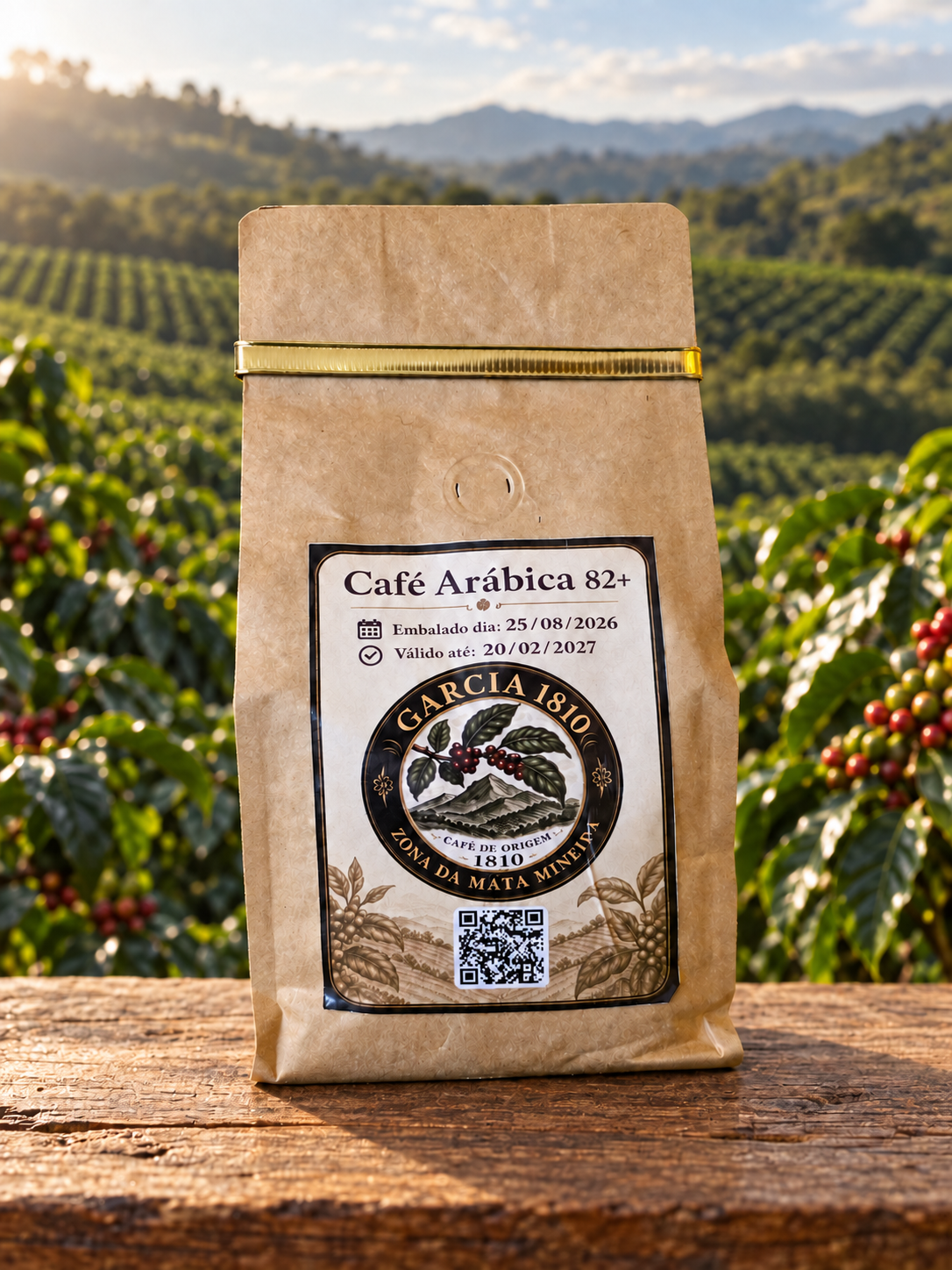
Illustrative composition of a Café Garcia 1810 package labeled Café Arábica 82+, on a wooden surface, with rows of coffee plants and hills in the background
GARCIA 1810Memories in every cup.
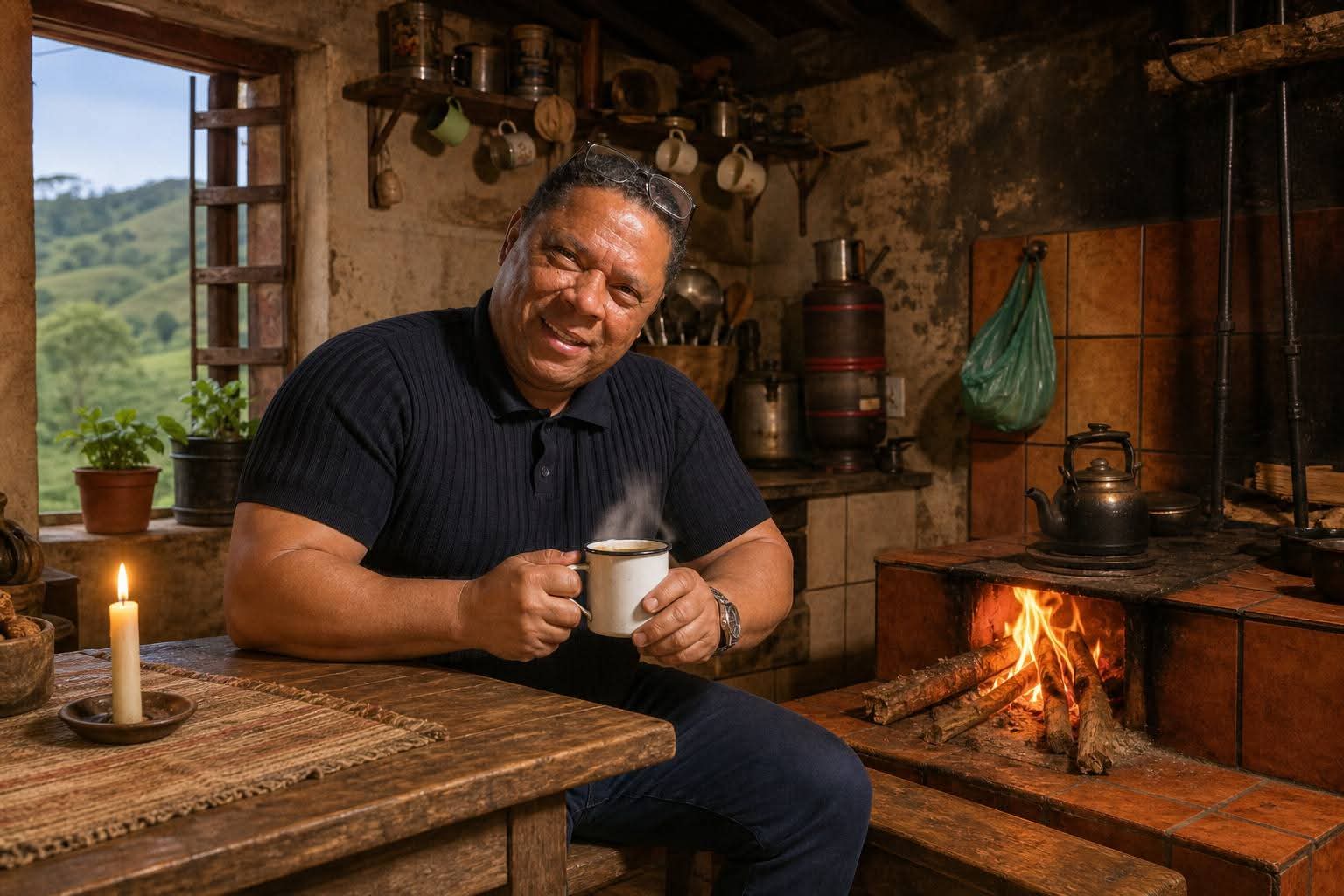
Portrait of the initiative’s creator seated at a table, holding a cup of coffee
Comendador Carlos Alberto Garcia Creator of the initiative

THE INSPIRATION

Memory meets
flavor.

For Comendador Garcia, revisiting his family’s history is also an invitation to reconnect with coffee: to notice its aroma, savor its flavor, and appreciate its origin.

With an identity of its own, Café Garcia 1810 brings that inspiration to the cup. The aim is to reconnect people with the pleasure of good coffee and the gatherings it makes possible.

Comendador Garcia Memory, origin, and flavor

THE NAME AND THE MEMORIES

A reference to the past.
An inspiration for the present.

Before the brand,
the journeys.

In research on the Garcia de Mattos family, the year 1810 is associated with the presence of Francisco Garcia de Mattos in Santa Rita do Ibitipoca, Minas Gerais.

It offers a window into a time of journeys, ties between families, and the movement of goods. These are memories that Comendador Garcia’s project seeks to revisit and share.

1810 connects historical memory with the contemporary identity of Café Garcia.

Explore the historical references

THE FAMILY THROUGH TIME

Roots,
paths and
transformations.

The Garcia de Mattos family appears in the history of Minas Gerais through mule caravan transport, rural life, coffee, and involvement in municipal affairs.

The Portuguese connection

The Garcia de Mattos family’s history connects roots in the Portuguese islands with journeys through Minas Gerais, shaped by families, land, and coffee.

Explore the family’s continuity
  1. 1810

    SANTA RITA DO IBITIPOCA

    A record in Minas Gerais

    Francisco Garcia de Mattos appears in the family documents studied by Braga. This milestone inspires the memories revisited by the project.

  2. 1820

    CHAPÉU D’UVAS

    Other paths, new roots

    The research places Francisco in Chapéu D’Uvas, in the region that would later become part of Juiz de Fora.

  3. 1850

    TRANSPORTATION AND TRADE

    Mule caravans and coffee

    In the first half of the 19th century, Francisco, Antônio, and Manoel are associated with transporting the Armond family’s coffee production.

  4. 1856

    SÃO PAULO DO MURIAHÉ

    A presence in Zona da Mata

    Between 1854 and 1856, land records document José and Manoel in the region. By 1856, Manoel was living in São Paulo do Muriahé, now Muriaé.

  5. 1868

    MUNICIPAL PUBLIC LIFE

    Involvement in local institutions

    According to the study, Manoel Garcia de Mattos presided over the Municipal Council of São Paulo do Muriahé between 1867 and 1868.

  6. 1879

    COFFEE AND THE RAILROAD

    The recorded estate

    Manoel’s estate inventory lists 50,000 coffee plants at Boa União and ten shares in the Estrada de Ferro do Carangola.

Periods are represented by their final year; 1850 is an approximate reference. Source: Braga, 2017, pp. 62–82. Comendador Garcia’s family memories continue this journey through history.

COMENDADOR GARCIA’S FAMILY MEMORIES

The Garcia family — roots,
work, and continuity.

In the memories shared by Comendador Garcia, his family’s story traces back to José Garcia de Mattos, whose descendants spread across Minas Gerais. Four generations connect those roots to his own story.

  1. GREAT-GRANDFATHER

    José Garcia
    de Mattos

    The starting point of the four generations presented here, rooted in the Garcia family’s history in Minas Gerais.

  2. GRANDFATHER

    José Bernardo
    Garcia

    Known personally by his grandson, he died in 1971 at the age of 109. He left a memory shaped by work, experience, and perseverance.

  3. FATHER

    José Bernardo
    Garcia Filho

    In the 20th century, he moved from Minas Gerais to Rio de Janeiro. His path led him into earthmoving, engineering, urban development, and business ventures. He died in 1992.

  4. CONTINUITY

    Comendador
    Carlos Garcia

    Son of José Bernardo Garcia Filho, grandson of José Bernardo Garcia, and great-grandson of José Garcia de Mattos. As President and CEO of Grupo Seaplan, he carries forward this history of work and entrepreneurship.

Across the generations, the family account spans different economic cycles: from mule caravan trade to coffee cultivation and commerce; from mining to railroad expansion; from earthmoving to engineering and urban development.

It is a story of continuity, adaptation, and transformation. For Comendador Garcia, the experiences of earlier generations represent both an inheritance and the responsibility to carry it forward through contemporary entrepreneurship.

“Four generations. More than two centuries of roots. A story built through work and looking toward the future.”

Comendador Garcia

THE ROUTES OF COFFEE

Coffee moved
more than goods.

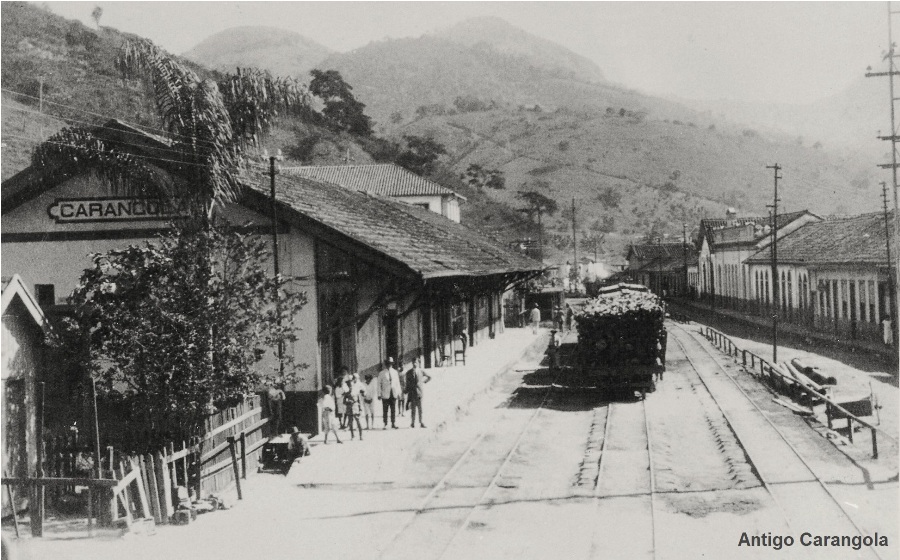
Historical photograph of Carangola station with a train and people on the platform
Carangola station. Date unknown.Credit: Antigo Carangola.

Before the railroads, mule caravans brought farms, markets, and people closer together. In Zona da Mata, the routes of coffee also carried news, encounters, and change.

The study of the Garcia de Mattos family identifies their connection to mule caravan trade and the rural economy. In Manoel Garcia de Mattos’s estate inventory of 1879, it records a coffee plantation at Fazenda Boa União and a shareholding in the Estrada de Ferro do Carangola.

This history also includes the labor of enslaved people and the communities that sustained the economy of the time. Preserving memory means recognizing the people who shaped it.

  1. FAMILY RESEARCH1810

    A documented presence

    Francisco Garcia de Mattos in Santa Rita do Ibitipoca, according to historical research.

  2. COFFEE AND TRANSPORTATION1879

    An economy in motion

    The study records 50,000 coffee plants and ten railroad shares in Manoel’s estate inventory.

  3. MUNICIPAL HISTORY1887

    The railroad reaches the city

    The Carangola municipal government dates the arrival of an Alto-Muriahé train to July 10.

Milestones from distinct contexts: family, economic activity, and the municipality. References at the bottom of the page.

THE CONTEMPORARY CHAPTER

Other industries.
New horizons.

Today, Comendador Garcia leads this effort to recover the family’s memory. His business career is linked to Grupo Seaplan, identified in the press as operating in construction, mining, and hospitality.

The business timeline has milestones of its own. The Café Garcia 1810 initiative is part of this contemporary chapter.

  1. 1929

    BUSINESS MEMORY

    Business roots

    Seaplan’s institutional presentation dates the beginning of the business group to which it belongs to 1929.

  2. 1970

    CONSTRUCTION

    The founding of Seaplan

    Seaplan Construções, Participações e Empreendimentos is founded, establishing a distinct milestone in the company’s history.

  3. 2000

    MANAGEMENT AND PROCESSES

    A commitment to quality

    According to the company, January marks the start of the implementation of a management system linked to the Brazilian Program for Quality and Productivity in Habitat, known as PBQP-H.

  4. 2023

    OPERATIONS ACROSS INDUSTRIES

    Comendador Garcia leads the group

    A DF Esportes report identifies Comendador Garcia as CEO and lists construction, mining, and hospitality among the group’s areas of activity.

References: Seaplan’s institutional presentation and DF Esportes, July 4, 2023.

EXPERIENCE AND CONNECTIONS

Projects are also built
through institutional relationships.

Comendador Garcia’s institutional profile brings together experience in engineering, mining, international project management, and public policy. This experience forms the professional background of the person now seeking to bring together memory, coffee, and regional development.

Professional profile · Comendador Garcia

TODAY

Memory inspires. Flavor brings people together. With an identity of its own, Café Garcia 1810 connects this effort to recover the past with the experience in the cup and the Polo Gastrocafeicultor project.

Discover the coffee

THE HISTORY OF GRUPO SEAPLAN

The alliance that strengthens Brazilian agribusiness and transforms Africa into the world’s second breadbasket.

Grupo Seaplan · Institutional history

With 95 years of dedication to agribusiness, Grupo Seaplan, in partnership with the Agro é Nosso brand and Banco AN, solidifies its position as one of the leading forces in Brazil’s agricultural sector. The Agro é Nosso brand stands out as one of the most important representatives of Brazilian agribusiness, synonymous with innovation, sustainability, and global impact.

Grupo Seaplan, through its subsidiary Agricongo Alliance S.A., together with Seagen-Congo, is expanding its expertise to the African continent in a monumental effort to transform Africa into the world’s second breadbasket. This initiative aims not only to achieve food self-sufficiency for African nations, but also to contribute significantly to global food security.

The partnership with Banco AN enables Grupo Seaplan to operate efficiently throughout Brazil, ensuring that the best suppliers are aligned with the goals of agribusiness expansion and sustainability. EMBRAPA’s ongoing support reinforces this mission, bringing cutting-edge technology and advanced farming techniques that will be implemented in both Brazil and Africa.

Through this strategic alliance, Celso Sá of Oslec Investimentos, Carlos Alberto Garcia, President of Grupo Seaplan, and Ari Agro, leader of the Agro é Nosso brand, are at the forefront of a movement that promises to revolutionize global agriculture. Together, they bring more than a century of experience, working toward a future in which Africa becomes an agricultural powerhouse, capable of feeding the world and creating prosperity for its people.

Agro is Tech. Agro is Pop. Agro é Nosso.

This partnership not only celebrates the success of Brazilian agribusiness, but also envisions a promising future for the African continent, turning challenges into opportunities and establishing Africa as the world’s next great breadbasket.

Congratulations, Carlos Alberto Garcia and Ari Agro, on this inspiring vision and your dedication to transforming the world through agribusiness!
THE REGION

Minas in the landscape.
Coffee in the culture.

Carangola preserves the memory of its railroads and is part of the Matas de Minas coffee region. Town and countryside meet in a culture of production, trade, and hospitality.

Discovering this world is part of the reconnection the brand proposes: looking beyond the cup, appreciating coffee culture, and recognizing the region that inspires its story.

CARANGOLAZona da Mata · Minas Gerais

ORIGIN AND FLAVOR

Rediscover coffee.
Appreciate its origin.

From the aroma that awakens memories to the pause to savor a cup, Café Garcia 1810 invites you to rediscover the pleasure of good coffee.

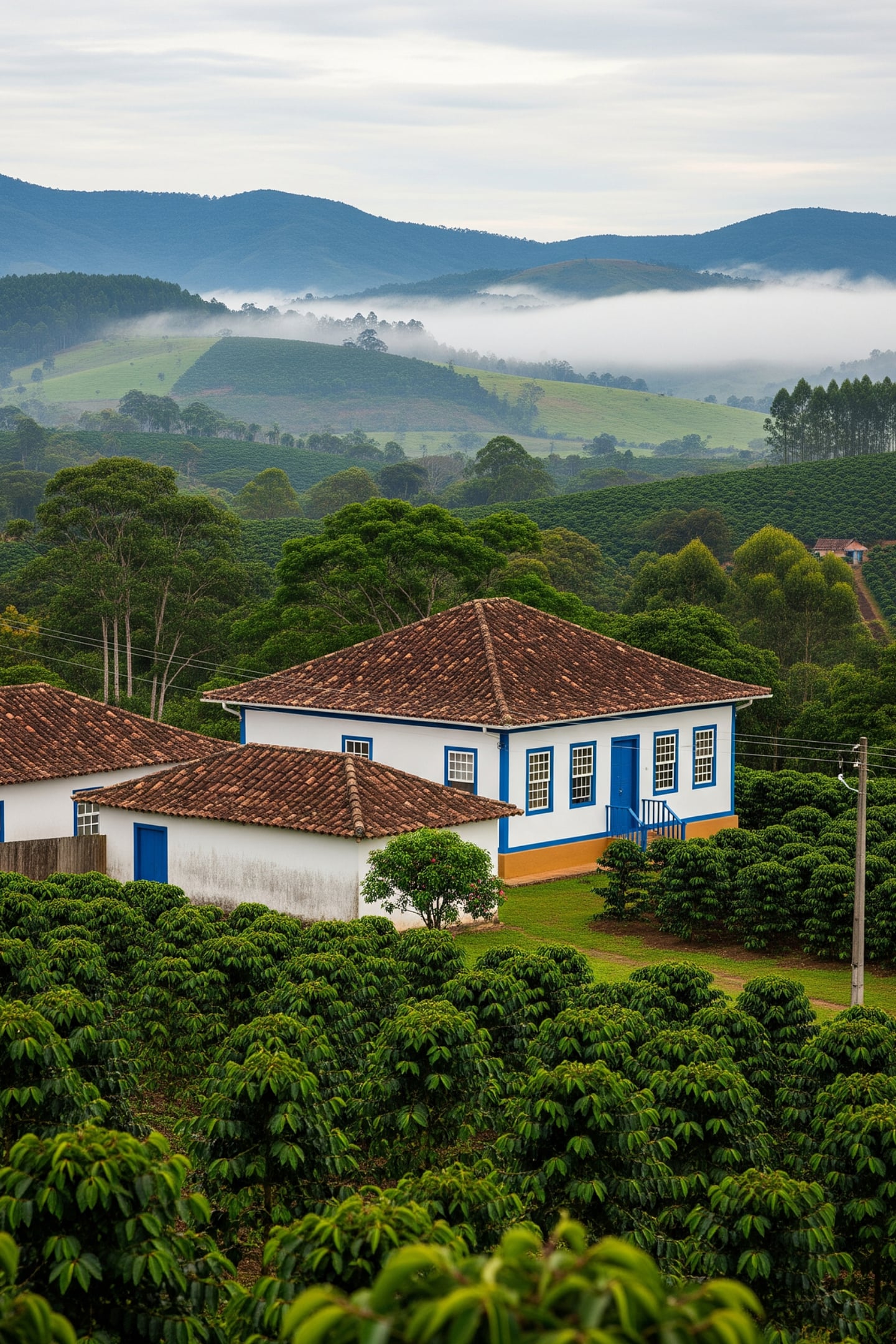
Illustrative landscape with a large white house, blue windows, coffee fields, and mist-covered hills
Coffee-growing landscape · Illustrative image.

CAFÉ GARCIA 1810 · PRODUCT PROFILE

The coffee
Arabica · specialty coffee
Score
82+
Origin
Zona da Mata region, Minas Gerais
Growing altitude
About 1,200 meters
The horizon
Domestic and international markets

An independent brand with an identity of its own. Trademark application filed with INPI.

LEARN BEFORE YOU CHOOSE

Learn to select
your beans.

Which should you choose?

82+

Choose 82+ if you are looking for an everyday coffee and value for your money. When choosing a lot, look for a balanced cup without the bitterness of excessive roasting.

84+

Choose 84+ if you want to explore natural flavor notes and more nuances in the cup. If you prefer sweetness and body, check for these attributes in the lot description. Flavor notes do not mean that flavorings have been added.

Are you thinking about buying beans to try, or would you like to better understand a particular package you have found?

Also consider the brewing method you use most: filter coffee, French press, or espresso.

Consider the score, flavor description, origin, and brewing method to find a coffee profile that suits your taste.

BEFORE THE CUP

The care that
preserves flavor.

Reconnecting with coffee begins before brewing. Bean selection, drying, and storage are all part of the journey that shapes the experience in the cup. Understanding this care also means learning to appreciate coffee.

  • Selection

    A close look at every bean.

    Examining the beans and identifying defects helps you understand the quality of the raw material. Selection is one of the steps of care that precede the beverage.

  • Drying

    Attention to the process.

    Managing the drying process influences coffee quality. Monitoring moisture and processing conditions helps preserve the beans’ potential.

  • Storage

    The care continues.

    After drying, a clean, ventilated environment protected from moisture helps preserve the coffee’s characteristics until the next stages.

KNOWLEDGE THAT CONNECTS

ONLINE COURSE IN DEVELOPMENT

For those who live and breathe coffee.
And those who want to know it better.

Do you work with coffee, or enjoy understanding what makes a cup special? We are preparing an online course to introduce you to the care that preserves bean quality, with clear explanations and everyday examples.

For those who work with coffee

Producers, suppliers, and teams: explore practices for drying, storage, and lot tracking.

For those who appreciate good coffee

Understand the journey before the cup and the importance of origin, care, and proper storage.

WHAT YOU WILL DISCOVER

  1. Care in drying

    Handling, weather, and uniformity: understand why every step deserves attention.

  2. Preserving quality

    Packaging, environment, and organization to keep track of coffee after drying.

  3. A closer look

    What to observe, record, and ask to better understand each lot.

I want to explore the course

HOW WE ARE PLANNING THE LESSONS

  • Short videos with clear explanations.
  • Images and comparisons for practical understanding.
  • Quick questions and materials to refer to later.

The initial focus will be on post-harvest drying and storage, with an accessible introduction for coffee enthusiasts as well.

Registration is not yet open. The final curriculum and pricing will be announced on this page.

THE VISION FOR THE FUTURE

A place for
coffee. And for
reconnection.

The Polo Gastrocafeicultor da Zona da Mata project aims to take this vision beyond the cup, bringing together production, memory, gastronomy, and tourism in an experience that celebrates coffee and the region.

PROJECT IN DEVELOPMENT
  1. 01

    Production & quality

    Bring producers and knowledge together, from bean selection to coffee preparation.

  2. 02

    Culture & memory

    The proposal includes the Museu Vivo do Café Garcia (Garcia Living Coffee Museum) and the production of a documentary about family memories and regional coffee farming. Photographs, documents, and stories could connect different generations with the routes of coffee in Zona da Mata.

  3. 03

    Gastronomy & hospitality

    Develop tasting and social experiences, with space to discover aromas, savor flavors, and learn about brewing methods.

  4. 04

    Tourism & region

    Connect places, landscapes, and people through a proposal for visitor experiences and regional appreciation.

MEMORY THAT INSPIRES. FLAVOR THAT BRINGS PEOPLE TOGETHER.

Reconnect with flavor.
Connect with its origin.

Café Garcia 1810 · An initiative by Comendador Garcia.

Rediscover coffee
References and credits

Historical and institutional sources on the Garcia de Mattos family, Grupo Seaplan, and coffee culture. Family memories: Comendador Garcia.

Portrait of Comendador Garcia, visual identity, and original product photograph: the Café Garcia 1810 collection. Opening image: illustrative composition edited with artificial intelligence. Coffee-growing landscape with a country house: illustrative image from the collection. Carangola station photograph: credit Antigo Carangola. Agro é Nosso emblem: reproduction of the original image.